After a 23 long years searching for the reason my son, Glyn and identical twin daughters Asha and Bree had such severe and baffling medical and developmental problems it was discovered they shared a change in the cdkl5 gene.
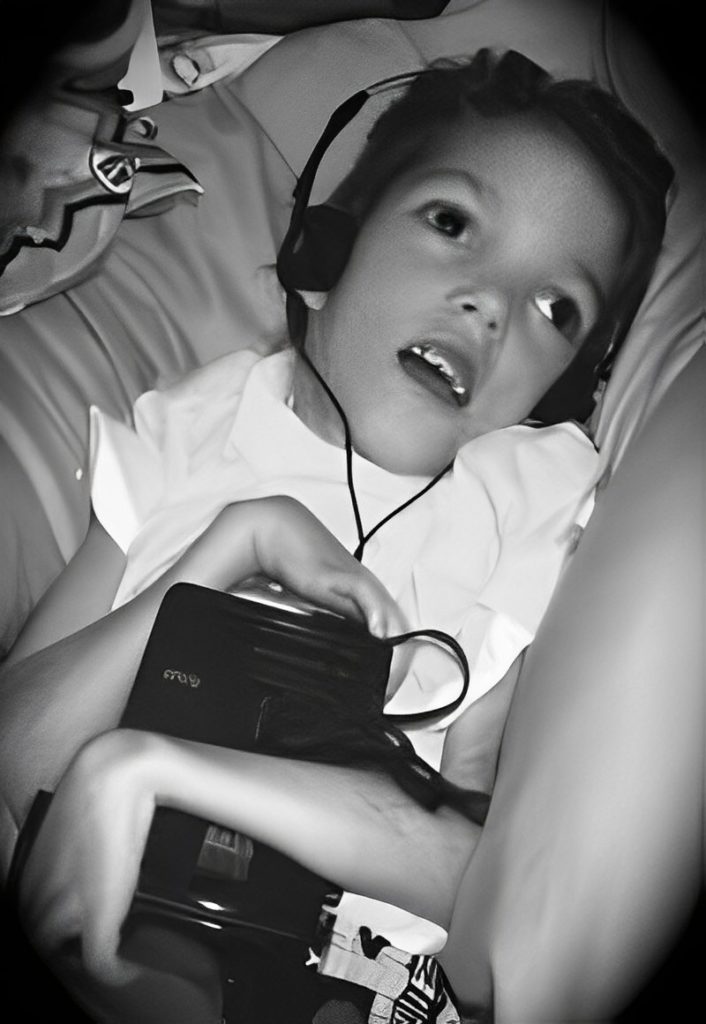
Our experience with CDD began when Glyn, our third beautiful child had an Infantile Spasm at only two days old that his paediatrician dismissed as colic because Glyn showed no other symptoms. We tried to ignore the rapid increase in these spasms and had repeated reassurances until his first hospital admission at 9 weeks of age when he had a tonic/clonic seizure.
Glyn struggled for 16 years through daily seizures and never ending cocktails of drugs that wreaked havoc on his little body leading him to develop respiratory, intestinal and skeletal problems so severe they overtook the focus of stopping the seizures that were now described as Lennox Gastaut like.
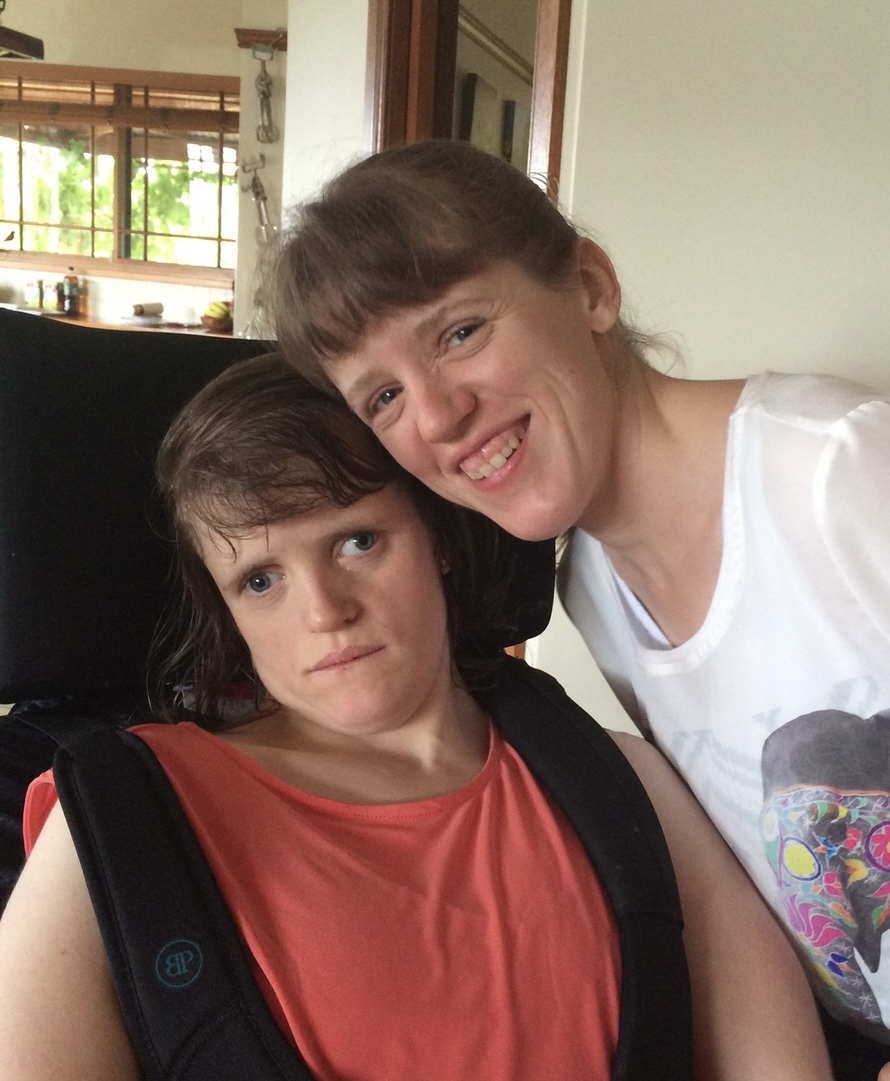
Our identical twin girls, Asha and Bree were born when Glyn was two and a half years old. Perfect, pink and oh, so tiny, we were thrilled to have some joy back in our lives. But when nine-week old Asha had a spasm while feeding, I knew what it was in an instant and a shockwave ran through me.
The next few years for Asha were a repeat of what we had been through with Glyn but with added fear, because Asha and Bree were identical twins, was Bree certain to develop seizures as well?
We scrutinized her every movement for years, until that fear faded into the background of a never ending cycle of hospital admissions, therapy sessions, seizure charts, drugs and special diets for Glyn and Asha.
Bree didn’t develop seizures but she didn’t come through unscathed. Her development was ‘unique,’ a mix of repetitive odd behaviors, major melt downs, sensitivities, delayed speech and social avoidance. It took 9 years for someone to finally diagnose her with autism. With the diagnosis came huge relief. For years, I had been told that Bree’s behavior was related to the stressful home environment that comes with caring for medically fragile children.
What happened to my babies? I needed to know. I sought out many research studies and doctors linked to any one of the many issues my children faced. Among these was a chance meeting with a doctor I overheard mentioning Rett Syndrome as he passed by Glyn’s hospital room with a group of medical students. I quickly introduced myself to the geneticist, Prof. John Christodoulou.
Though nothing came of that first meeting, it later proved to be a very important piece of our puzzle. I volunteered my children to be part of two separate studies that years later had a huge bearing on the discovery of ‘our gene’.
One of the studies was on siblings with epilepsy, the other on siblings with autism. Blood was drawn from all of my children so their DNA could be compared with others who had seizure disorders. This DNA was stored for future studies.
A doctor involved in the autism study had one quick look at Asha who was sitting in her wheelchair in her usual pose of one leg folded up over the other and her hands in her mouth and said, “She has Rett Syndrome.” I told her how, because if Glyn and Bree , this had been disputed time after time but she was adamant saying, “I worked with Andreas Rett and I have seen enough girls with RTT to recognize it.”
That statement led me back to Prof. John Christodoulou who was very involved in Rett Syndrome research and also linked me into the large Rett Community. It was the first time I felt as though I belonged anywhere. Meeting with other families and joining an online support group for families who had a child with Rett Syndrome who knew exactly what I was talking about when describing Asha gave me the strength to carry on supporting my children. However, there was a niggling doubt in my mind about our Rett connection. Nobody else spoke of Infantile Spasms or siblings with similar problems, but there were a few who mentioned having another child with autism.
In 1999 when the RTT gene MECP2 was discovered and Asha tested negative I felt as though once again we were on our own. MECP2 mutations were found in 80% of those with Rett Syndrome and now researchers continued to search for the other gene or genes responsible for the 20% who had a negative result. In 2004 Prof. John Christodoulou led an Australian research team that studied my children’s DNA and found abnormalities they had in common with each other in a gene called STK9 (later to be known as CDKL5).
At the same time, a German research team had found STK9 (CDKL5 ) to be the second gene responsible for Infantile Spasms and had discussed the link between this gene and atypical RTT. These two groups independently discovered CDKL5 to be the second gene responsible for RTT and their research papers were published simultaneously in the same issue of the prestigious journal, The American Journal of Human Genetics 2004.
When Glyn passed away in 1997, I was left wondering what his life had been all about. What reason was there for his suffering? Glyn’s stored DNA was his gift to all those who have since been given a diagnosis of what is now known as CDKL5 Deficiency Disorder. Without it, the many families around the globe whose child has a CDKL5 mutation might still be searching for a cause as to why their beautiful baby has such a devastating disorder. They would be where I was all those years ago, not knowing, not belonging and on an eternal mission to find an answer.
Over the years since the discovery of cdkl5 we still continue to take part in other research studies that relate to Asha’s and Bree’s unique presentations in the hope of shedding light on how cdkl5 works.
They are currently involved with Monash University , Victoria looking at why, despite being identical twins and sharing the exact mutation, do Asha and Bree present with such different phenotypes.
And another study at Boston Hospital, US is looking at how cdkl5 affects Bree who has a diagnosis of autism and no history of seizures which in future will lead to others with autism like her being diagnosed with CDD.
Founding member of the International Foundation for CDKL5 Research. Read more at cdkl5.com/blog/glyns-gift.