Alysson Muotri, PhD
University of California, San Diego, USA
“ Generation of a cortico-thalamic human assembloid system for phenotypic validation ” (PDF abstract on the Loulou Foundation site, opens in a new tab.)
This page has not yet been reviewed by our Scientific and Medical Advisory Committee. Content is written by parent volunteers and may not reflect current medical guidelines.
Research
CDKL5 Australia coordinates Australian family participation in CDKL5 research, connecting families with registries, natural-history studies, and clinical trials, and acting as the Australia-side conduit for international research foundations and industry sponsors. We don’t run trials. We help families engage with the ones that exist.
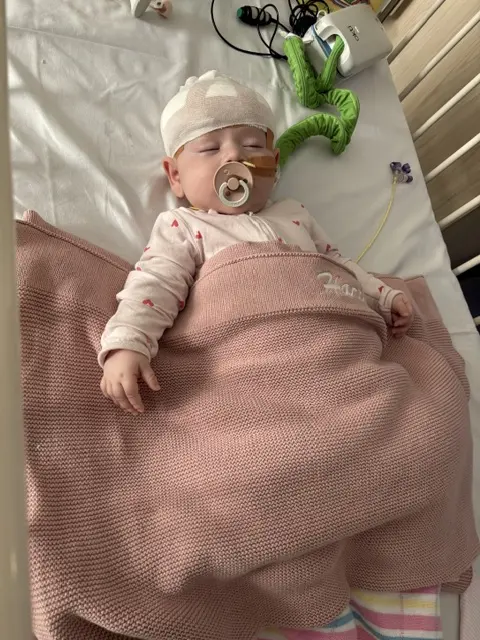
Every CDKL5 trial, every approved treatment, every regulatory submission begins with the same precondition: a documented population of children whose families can be reached. Patient registries are the foundation of all of it.
The Connect CDKL5 registry, the global natural-history study run by the International Foundation for CDKL5 Research (IFCR), informs trial design, lets researchers identify cohorts, and supports submissions to bodies like the US Food and Drug Administration and the Australian Therapeutic Goods Administration (TGA). The International CDKL5 Disorder Database, hosted by The Kids Research Institute Australia in Perth, contributes Australian and international longitudinal data into the same evidence base.
The practical consequence: when an industry sponsor evaluates whether to trial a treatment in Australia, the answer often turns on whether enough Australian children are documented and contactable. Family participation in registries is the rate-limiter on every other piece of CDKL5 research moving forward.
This is one of the most useful things any Australian family can do.
Three concrete steps, in roughly the order most families take them.
The IFCR-run global registry. Free, online, and the single most useful thing for international research coordination.
Register at cdkl5.comAustralian-led, hosted by The Kids Research Institute Australia. Complementary to the IFCR registry; many families participate in both.
Register at the Kids InstituteWe relay Australian-relevant trial and study announcements as they land, so you don’t have to scan international forums to keep up.
Subscribe
Global research-coordination foundation for CDKL5 Deficiency Disorder. Operates the Connect CDKL5 registry, the largest natural-history study in the disorder, and convenes industry and academic researchers internationally.
(opens in a new tab)
Perth-based child-health research institute (formerly Telethon Kids Institute). Hosts the International CDKL5 Disorder Database and houses the longest-standing Australian research program on CDKL5 and Rett-spectrum disorders.
(opens in a new tab)
Research group at Kids Research, Children’s Hospital at Westmead. Studies the pathophysiology of neurodevelopmental disorders and develops gene-therapy approaches; led by Professor Wendy Gold.
(opens in a new tab)
Melbourne-based paediatric research institute. Active programs in epilepsy genomics and neurodevelopmental therapeutics include work directly relevant to CDKL5 Deficiency Disorder.
(opens in a new tab)
Sydney-based gene-therapy and genetic-disease research institute, public face of the Jeans for Genes campaign. Programs include neurogenetic-disorder gene therapy and translational genomics.
(opens in a new tab) Open-access search portal for published clinical and genotype data on CDKL5 Deficiency Disorder. Maintained by The Kids Research Institute Australia.
(opens in a new tab)For the Australian researchers and clinicians in our network, including Professor Wendy Gold, Professor Helen Leonard, and Professor Jenny Downs, see Industry & Research Partners.
The six projects below are the Loulou Foundation 2026 Pilot Grant Awardees, early-stage CDD research currently funded for the year. Each project title links to the published abstract on the Loulou Foundation website. The pilot-grant cycle runs annually; this list is replaced when the next round is announced. (Loulou Foundation website opens in a new tab.)
University of California, San Diego, USA
“ Generation of a cortico-thalamic human assembloid system for phenotypic validation ” (PDF abstract on the Loulou Foundation site, opens in a new tab.)
Harvard Medical School, USA
“ AI-Enabled In Vivo Phenotypic Screening and Human Brain Organoid Validation to Identify Novel Therapeutics for CDKL5 Deficiency Disorder ” (PDF abstract on the Loulou Foundation site, opens in a new tab.)
Northwestern University, USA
“ Understanding the Role of CDKL5 C-Terminal Domain in CDD through Proximity Proteomics and Cross-Vertebrate Analysis ” (PDF abstract on the Loulou Foundation site, opens in a new tab.)
University of California, Los Angeles, USA
“ AI Discovery of Circuit-Level Mechanisms and Electrophysiological Biomarkers of CDKL5 Deficiency Disorder ” (PDF abstract on the Loulou Foundation site, opens in a new tab.)
Boston Children’s Hospital, USA
“ Enhancing KCC2 Functional Expression as a Novel Therapeutic Approach for CDKL5 Deficiency Disorder (CDD) ” (PDF abstract on the Loulou Foundation site, opens in a new tab.)
University of Pittsburgh, USA
“ Breaking the Mitochondrial–Synaptic Pathogenic Loop to Restore Neural Network in CDKL5 Deficiency ” (PDF abstract on the Loulou Foundation site, opens in a new tab.)
Source: Loulou Foundation 2026 Pilot Grant Awards. Full project abstracts and prior years are available on their grants page.
Selected conference recordings from the International Foundation for CDKL5 Research. Open the video on YouTube to watch.
Industry, academic, and clinical partners working on CDKL5 Deficiency Disorder: CDKL5 Australia engages directly on family-facing recruitment, registry liaison, and Australian regulatory pathway navigation, including the Therapeutic Goods Administration (TGA), the Pharmaceutical Benefits Scheme (PBS), and the Special Access Scheme (SAS).
We don’t recommend specific treatments and we don’t run trials. We are the most reliable Australia-side route for engaging the Australian CDKL5 Deficiency Disorder family population.
Partnership enquiries: partnerships@cdkl5australia.com.au
If you’ve read this far and the words “registry” and “natural-history study” feel intimidating, they’re easier than they sound, and you don’t have to do them today.
The forms are short. Each registry holds your information confidentially under its own privacy framework. You can withdraw at any time.
If you’d like to talk to another Australian parent who’s been through it before signing up, email us and we’ll connect you.
Every registry entry, every data point, every family who raises their hand moves CDKL5 research forward. Thank you.